EDGEI-2026
Call for Papers
EDGEI-2026 serves as a premier global forum for researchers, academicians, industry professionals, and innovators to explore advances in intelligent computing at the network edge. The conference focuses on bringing intelligence closer to data sources to enable real-time, autonomous, secure, and scalable digital systems. EDGEI-2026 emphasizes the convergence of Artificial Intelligence, Edge Computing, Internet of Things (IoT), Cyber-Physical Systems, and advanced communication technologies, addressing both foundational research and real-world applications. The scope of EDGEI is intentionally designed to attract visionary, system-level, and high-impact research rather than incremental or narrowly scoped contributions. The conference shall have multiple tracks but not limited to the topics specified in the tracks.
EDGEI-2026
Conference Topics: (Not Limited To)
Track 1: AI, Machine Learning and Intelligent Computing
Machine Learning and Deep Learning
Generative AI and Foundation Models
On-Device and Edge AI
TinyML and Lightweight AI
Explainable and Trustworthy AI
Intelligent Data Analytics
Track 2: Distributed Computing, Networking and Cloud Intelligence
Distributed and Cloud Computing
Edge–Cloud Collaboration
5G/6G and Intelligent Networks
Fog Computing
Resource Management for Edge Systems
IoT and Sensor Networks
Track 3: Secure, Federated and Sustainable Intelligence
Federated and Collaborative Learning
Privacy-Preserving Intelligence
Security of Edge/Distributed AI
Adversarial and Robust AI
Energy-Efficient Edge Computing
Green and Sustainable AI
Track 4: Intelligent Applications and Autonomous Systems
Smart Healthcare and Smart Cities
Intelligent Transportation
Smart Agriculture
Industrial AI and Cyber-Physical Systems
Robotics and Autonomous Systems
Edge Intelligence for Real-Time Applications
Digital Twins and UAV Systems
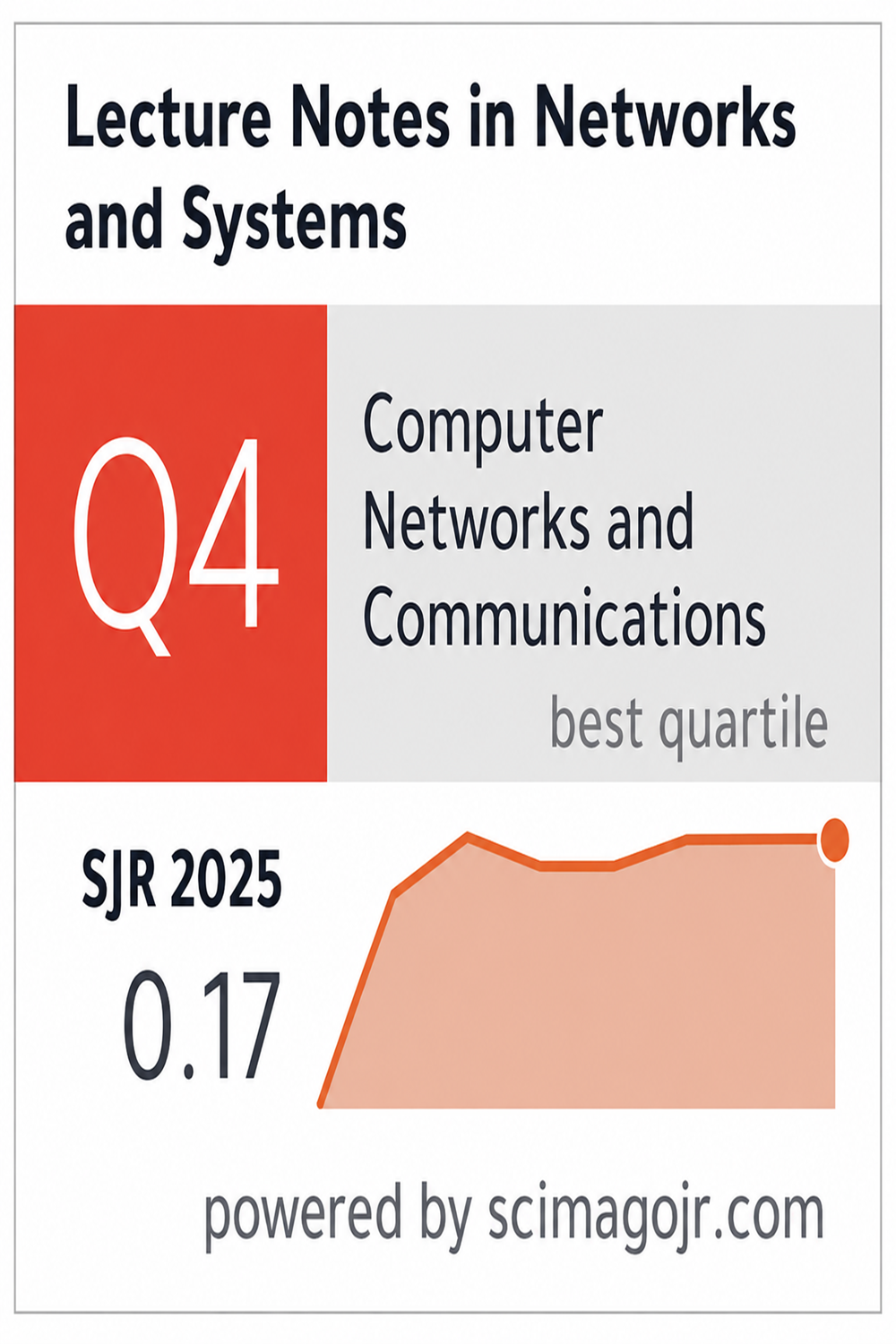
Submitted papers must be original, unpublished, and not under consideration elsewhere. All manuscripts will undergo a rigorous peer review process, and accepted papers must be registered to be included in the final proceedings. All accepted and registered papers shall be published in SPRINGER SCOPUS indexed book series. "Lecture Notes in Networks and Systems (LNNS)".
EDGEI-2026
Abstracted and indexed in
All accepted, registered and presented papers under this conference will be submitted to Springer, Lecture Notes in Networks and Systems Series.
The books of this series are submitted to
- SCOPUS
- SCImago
- DBLP
- EI Compendex
- INSPEC
- Japanese Science and Technology Agency (JST)
- zbMATH
- WTI AG